Can Nurse Practitioners Write Prescriptions for Family Members
Editor-In-Principal: C. Michael Gibson, Chiliad.S., M.D. [ane]
Overview
A medical prescription (Template:Unicode) is an guild (often in written form) by a qualified health care professional person to a pharmacist or other therapist for a treatment to be provided to their patient. A prescription is a legal document which not only instructs in the preparation and provision of the medicine or device only indicates the prescriber takes responsibility for the clinical care of the patient and the outcomes that may or may not be accomplished.
Format and definition

Prescriptions are typically handwritten on preprinted prescription forms that are assembled into pads, or alternatively printed onto like forms using a calculator printer. Preprinted on the form is text that identifies the document as a prescription, the proper noun and address of the prescribing provider and any other legal requirement such as a registration number (eastward.one thousand. DEA Number in the U.s.a.). Unique for each prescription is the proper name of the patient. In the United Kingdom the patient'south proper noun and address must also be recorded. Each prescription is dated and some jurisdictions may identify a time limit on the prescription[ii]. At that place is the specific "recipe" of the medication and the directions for taking it. Finally in that location is the dr.'southward signature.
The symbol "Rx" meaning "prescription" is a transliteration of a symbol resembling a capital letter R with a cantankerous on the diagonal (Template:Unicode).
The word "prescription" can exist decomposed into "pre" and "script" and literally means, "to write earlier" a drug tin be prepared. Those within the manufacture will often telephone call prescriptions simply "scripts".
Contents of the prescription
Both pharmacists and prescribers are regulated professions in most jurisdictions. A prescription as a communications machinery between them is besides regulated and is a legal document. Regulations may ascertain what constitutes a prescription, the contents and format of the prescription (including the size of the piece of paper - see Showroom C paragraph 10) and how prescriptions are handled and stored by the chemist. Many jurisdictions will now allow faxed or phone prescriptions containing the same information. Exhibit A below illustrates the legal definition of a prescription.
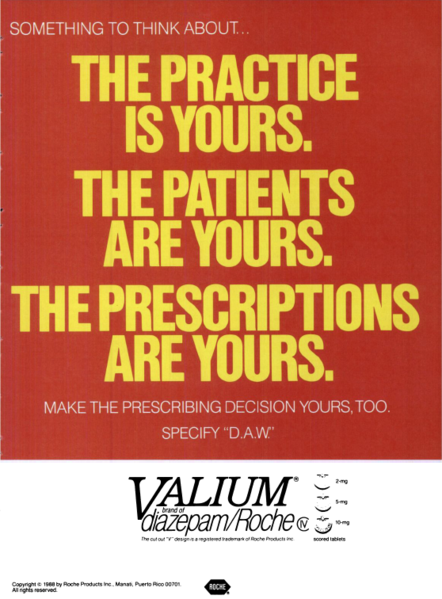
Drug companies apply direct-to-physician advertising in an endeavour to convince doctors to dispense as written with brand-name products rather than generic drugs.
Many brand proper noun drugs have less expensive generic drug substitutes that are chemically equivalent. Prescriptions will also incorporate instructions on whether the prescriber will allow the pharmacist to substitute a generic version of the drug. This instruction is communicated in a number of ways. In some jurisdictions, the preprinted prescription contains 2 signature lines: one line has "dispense as written" printed underneath; the other line has "exchange permitted" underneath. Some have a preprinted box "manipulate every bit written" for the prescriber to check off (but this is easily checked off by anyone with admission to the prescription). Other jurisdictions the protocol is for the prescriber to handwrite one of the following phrases: "dispense as written", "DAW", "make necessary", "do not substitute", "no substitution", "medically necessary", "do not interchange"[iii].
Every bit a guideline, pediatric prescriptions should include the historic period of the child if the patient is less than twelve and the historic period and months if less than five. (In general, including the age on the prescription is helpful.) In some jurisdictions, it may be a legal requirement to include the historic period of kid on the prescription [iv]. Adding the weight of the kid is as well helpful.
Prescriptions oft have a "label" box [five]. When checked, chemist is instructed to label the medication. When not checked, the patient just receives instructions for taking the medication and no information about the prescription itself.
Some prescribers farther inform the patient and pharmacist past providing the indicator for the medication; i.due east. what is being treated. This assists the chemist in checking for errors as many common medications tin be used for multiple medical weather.
Some prescriptions will specify whether and how many "repeats" or "refills" are allowed; that is whether the patient may obtain more of the same medication without getting a new prescription from the doctor. Regulations may restrict some types of drugs from being refilled.
In group practices, the preprinted portion of the prescription may comprise multiple prescribers' names. Prescribers typically circle themselves to point who is prescribing or in that location may be a checkbox adjacent to their name.
Handling of the prescription
When filled by a pharmacist, equally a matter of business practise, the chemist may write certain information right on the prescription. This may also be mandated by legislation (run across Exhibit D). Information such every bit the actual manufacturer of the drug and the date the medication was dispensed may be written right onto the prescription. Legislation may require the pharmacist sign the prescription. In computerized pharmacies, all such data is printed and stapled to the prescription. Sometimes such information is printed onto labels and the labels affixed right onto the prescription.
When filled by the pharmacist, prescriptions are typically assigned a "prescription number" (often abbreviated "Rx#") that is unique to the chemist's that filled the prescription. The prescription number is written right on the prescription past the pharmacist. The prescription number has the practical purpose of uniquely identifying the prescription afterward on while filed (both manual and electronic). The prescription number is also put on the label on the dispensed medication. The patient may exist required to reference the prescription number for refills and drug insurance claims. There may also be a legal requirement for prescription numbers for subsequent identification purposes.
Every bit a legal certificate, some jurisdictions will mandate the archiving of the original paper prescription in the chemist's. Frequently the patient cannot take the original prescription with them. Some jurisdictions may entitle patients to a re-create. The retention flow varies but tin can exist as long as six years. See Exhibit B for sample legislation governing the archiving of prescriptions. Once the retention period has passed, privacy legislation may dictate what can be done with the original paper prescription. Legislation may also dictate what happens to the prescriptions if the pharmacy closes or is sold. For example, if the pharmacy goes out of business, the pharmacist may be required to return the prescription to the patient, to the next closest pharmacy or to the governing body for pharmacists.
Prescriptions for non-narcotic drugs may also be "transferred" from i chemist's shop to another for subsequent repeats to be dispensed from another chemist's shop. The physical slice of paper that is the prescription is non transferred, but all the information on it is transferred from ane pharmacy to another. Legislation may dictate the protocol by which the transfer occurs and whether the transfer needs to be noted on the original paper prescription.
It is estimated that iii billion (3 thousand million) prescriptions were written in the The states in 2002[half dozen][7]. This number has grown from 1.v billion in 1989 and is expected to continue to grow.
Forgeries, thefts and prevention
Prescriptions are sometimes forged because many narcotics are cheaper and safer as prescription drugs than as street drugs. Forgery takes many forms: Prescription pads are sometimes stolen, amounts may be altered on legitimate prescriptions, remember numbers may be falsified and phoned or faxed prescriptions faked[8].
Some doctors will use prescription pads that incorporate similar security measures as checks to make photocopying prescriptions harder. These security measures may be mandated past law—see Exhibit C for sample legal specifications. Legislation may mandate that merely certain printers may print prescriptions[9]. New Bailiwick of jersey, for example, requires that only state approved printers may be used to impress official "New Jersey Prescription Blanks."[10] (See Exhibit E.) Prescribers can brand it harder for amount forgeries by writing out the amounts in words. Again, this may exist mandated by law[11].
Some jurisdictions help control stolen prescriptions by requiring special "triplicate prescriptions" for certain classes of drugs [12]. Blank triplicates are but available from the regulating agency and are individually numbered. The dr. retains a re-create, the second and third copies are given to the patient to requite to the pharmacist. The pharmacist retains the second copy and the tertiary copy is submitted to the regulating bureau. The regulating agency can event lists of stolen prescriptions that pharmacists tin can cheque. In this case, the prescription'south validity is farther limited to 72 hours from issuance. This system likewise has the further benefit of managing "double doctoring" where patients visit multiple doctors to get prescriptions. California has recently replaced tripicate forms with new forms that are impossible to photocopy or fax: the groundwork is printed with repetitions of the word void in a color that shows up as black on a photocopy.
States accept various laws making theft of prescription blanks or forgery of prescriptions criminal offenses and/or providing special treatment for these offenses (for Example North.J. Stat. 2C:21-1. making forgery of a prescription blank a third degree rather than 4th degree criminal offence).[13]
When forgery is suspected, pharmacists will call the doctor to verify the prescription and will endeavor to detain the suspect pending arrival of government. Forged prescriptions are no longer considered medical documents and doctor-patient confidentiality rules no longer utilise.
Writing prescriptions
Who can write prescriptions
Who can issue prescriptions is governed by local legislation. In the United States, allopathic physicians, osteopathic physicians, veterinarians, dentists, and podiatrists have full prescribing power. In all states, optometrists prescribe medications to treat certain eye diseases, and besides result spectacle and contact lens prescriptions for corrective eyewear. [xiv] States allow mid-level practitioners different prescription privileges. Physician assistants (also known every bit md assembly or PAs), nurse practitioners (also known as advance practice nurses or NPs), currently represent the spectrum of mid-level practitioners. Each state regulates what prescription powers members of the above group are allowed. Advance do nurses and physician assistants have some grade of prescriptive authorization in all 50 states. Registered pharmacists, besides, have limited prescriptive authority in merely 6 states.[15]. Several states have passed RxP legislation, allowing clinical psychologists (PhD's or PsyD's) who have besides undergone specialized training in script-writing to prescribe a limited number of drugs to treat emotional and mental disorders.
Legibility of prescriptions
Prescriptions, when handwritten, are notorious for existence often illegible (5% according to an Irish study [16]). Contrary to popular conventionalities, pharmacists exercise not have special deciphering skills. When in doubt, they call the dr.. At other times, even though some of the individual letters are illegible, the position of the legible letters and length of the give-and-take is sufficient to distinguish the medication based on the cognition of the pharmacist. For doctors that the chemist deals with regularly, they learn to read the physician'southward handwriting. Patients are brash to ensure that the prescription is legible before leaving the doctor'southward office. Some jurisdictions have made legible prescriptions a law (due east.one thousand. Florida[17]). Some have advocated the elimination of handwritten prescriptions altogether [18] and computer printed prescriptions are becoming increasingly common in some places.
Writing good prescriptions
Independent of the actual prescribing decision, elements of a good prescription writing include: [xix] [twenty] [21]
- careful utilize of decimal points to avoid ambiguity:
- avoid unnecessary decimal points: five mL instead of 5.0 mL to avoid possible misinterpretation of 5.0=fifty
- ever zilch prefix decimals: e.g. 0.v instead of .five to avoid misinterpretation with .5=5
- never have trailing zeros on decimals: e.one thousand. employ 0.5 instead of .50 to avoid misinterpretation with .l=50
- avoid decimals birthday by irresolute the units: 0.5 thousand =500 mg
- "mL" is used instead of "cc" or "cm³" even though they are technically equivalent
- directions should be written out in full in English although some common Latin abbreviations are listed below
- quantities can exist given directly or implied by the frequency and duration of the directions
- where the directions are "as needed" the quantity should always be specified
- where possible, usage directions should specify times (7 am, 3 pm, 11 pm) rather than simply frequency (3 times a day) and especially human relationship to meals for orally consumed medication
- use permanent ink
- avoid unspecified prn or "as needed" instructions—limits and indicators should be provided e.1000. "every 3 hours prn hurting"
- for refills, minimum duration between repeats and number of repeats should exist specified
- provide the indication for all prescriptions even when obvious to the prescriber and so that the pharmacist may place possible errors
- avert non-standardized units such as "teaspoons" or "tablespoons"
- write out numbers every bit words and numerals ("dispense #30 (thirty)") as in a banking concern typhoon or cheque
Abbreviations
See Appendix one for a complete list of common abbreviations found on prescriptions. Many abbreviations are derived from Latin phrases. Hospital pharmacies have more abbreviations, some specific to the hospital. Different jurisdictions follow unlike conventions on what is abbreviated or not. Prescriptions that don't follow area conventions may be flagged as possible forgeries.
Some abbreviations which are cryptic, or which in their written course might be confused with something else, are not recommended and should be avoided. These are included in a split list in Appendix 1. However, all abbreviations comport an increased risk for confusion and misinterpretation and should be used cautiously.
Non prescription drug prescriptions
Prescriptions are besides used for things that are not strictly regulated as a prescription drug. Prescribers volition frequently give non-prescription drugs out as prescriptions because drug benefit plans may reimburse the patient only if the over-the-counter medication is taken under the management of a doctor. Conversely, if a medication is available over-the-counter, doctors may ask patients if they want information technology as a prescription and possibly incur a pharmacist'south dispensing fee or whether they want to become it themselves at a lower cost. If the patient wants the medication non under prescription, the prescriber is usually careful to requite the medication name to the patient on a blank piece of newspaper to avoid any defoliation with a prescription. This is applied to not-medications as well. For example, crutches, and registered massage therapy may be reimbursed under some health plans, but only if given out by a prescriber as a prescription.
Prescribers volition often use blank prescriptions as general letterhead. A "medico'south note" for absent days from school or work for pocket-sized illnesses will oft be written on a blank prescription.
Legislation may define certain equipment as "prescription devices"[22]. Such prescription devices can just be used under the supervision of authorized personnel and such authorization is typically documented using a prescription. Examples of prescription devices include dental cement (for affixing braces to tooth surfaces), diverse prothesis, gut sutures, sickle jail cell tests, cervical cap and ultrasound monitor.
In some jurisdictions, hypodermic syringes are in a special class of their own, regulated as illicit drug use accessories[23] separate from regular medical legislation. Such legislation will oftentimes specify a prescription as the ways by which i may legally possess syringes.
Prescription may besides exist used equally a short course for prescription drugs to distinguish from over-the-counter drugs. It may likewise exist used in reference to the entire organization of decision-making drug distribution (equally opposed to illicit drugs). "Prescription" is often used as a metaphor for healthy directions from authority. A "light-green prescription" is direction from a doctor to a patient for exercise and salubrious diet.
History
The concept of prescriptions dates back to the beginning of history. So long as there were medications and a writing system to capture directions for preparation and usage, there were prescriptions [24].
Mod prescriptions are actually "extemporaneous prescriptions" from the Latin (ex tempore) for "at/from time" [25]. "Ad-lib" means the prescription is written on the spot for a specific patient with a specific ailment. This is distinguished from a not-ad-lib prescription which is a generic recipe for a general ailment. Modern prescriptions evolved with the separation of the part of the pharmacists from that of the physician [26]. Today the term "ad-lib prescriptions" is reserved for "compound prescriptions" which requires the pharmacist to mix or "compound" the medication in the chemist's for the specific needs of the patient.
Predating modern legal definitions of a prescription, a prescription traditionally is composed of iv parts: a "superscription", "inscription", "subscription" and "signature"[27].
The superscription section contains the engagement of the prescription and patient data (proper noun, accost, age, etc). The symbol "Rx" separates the superscription from the inscriptions sections. In this arrangement of the prescription, the "Rx" is a symbol for recipe or literally the imperative "accept." This is an exhortation to the pharmacist by the doctor, "I want the patient to accept the following medication"[28] - in other words, "take the following components and compound this medication for the patient."
The inscription section defines what is the medication. The inscription department is further equanimous of 1 or more of[29]:
- a "footing" or chief ingredient indended to cure (curare)
- an "adjuvant" to help its action and make it cure quickly (cito)
- a "corrective" to prevent or lessen any undesirable effect (tuto)
- a "vehicle" or "excipient" to brand it suitable for assistants and pleasant to the patient (jucunde)
The "subscription" section contains dispensing directions to the pharmacist. This may exist compounding instructions or quantities.
The "signature" section contains directions to the patient[thirty] and is often abbreviated "Sig."[31] or "Signa." Information technology also obviously contains the signature of the prescribing dr. though the give-and-take "signature" has two distinct meanings hither and the abbreviations are sometimes used to avoid defoliation.
Thus sample prescriptions in modern textbooks are often presented every bit:
Rx: medication Disp.: dispensing instructions Sig.: patient instructions
Futurity directions of prescriptions
As a prescription is nothing more than data among a prescriber, pharmacist and patient, it can be applied to it. Existing it is acceptable for electronic prescriptions. Medical data systems in some hospitals exercise abroad with prescriptions within the hospital. There are proposals to securely transmit the prescription from the doctor to the pharmacist using smartcards and the internet[32]. In the UK a project chosen the Electronic Transfer of Prescriptions (ETP) within the National Program for IT (NPfIT) is currently piloting such a scheme between doctors and pharmacies.
Within computerized pharmacies, the information on the piece of paper that is the prescription is captured immediately. Thereafter, the prescription is simply an entry inside the pharmacy'south information system and the paper prescription is stored for legal reasons only.
In cases where a pharmacy is function of a chain of pharmacies, the pharmacies are frequently linked together through their corporate headquarters with computer technology. Walgreens, for example, uses satellite technology to share patient information. A person who has a prescription filled at one Walgreens tin can get a refill of that prescription at any other store in the chain, besides as have their information available for new prescriptions at any Walgreens.
Some online pharmacies likewise offer services to customers over the internet. Walgreens' spider web site, for example, allows customers to order refills for medicine over the net, and allows them to specify the shop that they will choice up the medicine from. Their web site also allows consumers to lookup their prescription history, and to print it out.
Many pharmacies at present offer services to ship prescription refills right to the patient's home. CVS, for example, will ship refills complimentary of charge. They also offer mail service where you can mail in a new, original prescription and a signed certificate, and they will ship the filled prescription back to you.
Pharmacy data systems are a potential source of valuable information for pharmaceutical companies equally it contains data nearly md'southward prescribing habits. Prescription information mining of such data is a developing, specialized field[33].
Although computerized information systems offer bonny improvements to paper-based prescriptions, they are not yet available in many prescribers' practices. To reduce prescribing errors, some investigators have adult modified prescription forms that prompt the prescriber to provide all the desired elements of a good prescription. The modified forms as well contain pre-defined choices such as common quantities, units and frequencies that the prescriber may circle rather than write out. Such forms are idea to reduce errors (especially omission and handwriting errors) and are actively under evaluation. (Come across: Kennedy AG, Littenberg B. A Modified Outpatient Prescription Form to Reduce Prescription Errors. Joint Commission Periodical of Quality and Safety 2004; thirty:480-487.)
Appendix 1: Partial list of abbreviations
This appendix is a list of some abbreviations used in prescriptions. Its listing here does not mean such abbreviations should be used. See main article for word on the utilize of abbreviations. This listing does not include abbreviations for actual pharmaceuticals (which is a dissever article in itself). Capitalization and the apply of a menses is a thing of style. In the attached listing, Latin is non capitalized whereas English acronyms are. The period is used wherever there are letters omitted in the abbreviation.
| Abbreviation | Latin | Meaning |
|---|---|---|
| aa | ana | of each |
| advertizement | ad | up to |
| a.c. | ante cibum | before meals |
| a.d. | aurio dextra | correct ear |
| ad lib. | advertizing libitum | utilise as much as one desires; freely |
| admov. | admove | apply |
| agit | agita | stir/shake |
| alt. h. | alternis horis | every other 60 minutes |
| a.m. | ante meridiem | morn, before apex |
| amp | ampule | |
| amt | amount | |
| aq | aqua | water |
| a.l., a.due south. | aurio laeva, aurio sinister | left ear |
| A.T.C. | effectually the clock | |
| a.u. | auris utrae | both ears |
| bis | bis | twice |
| b.i.d. | bis in die | twice daily |
| B.1000. | bowel motility | |
| bol. | bolus | every bit a large single dose (usually intravenously) |
| B.Southward. | claret sugar | |
| B.S.A | body surface areas | |
| cap., caps. | capsula | capsule |
| c | cum | with (ordinarily written with a bar on top of the "c") |
| c | cibos | nutrient |
| cc | cum cibos | with food, (only also cubic centimetre) |
| cf | with food | |
| comp. | compound | |
| cr., crm | cream | |
| D5W | dextrose v% solution (sometimes written as DvW) | |
| D5NS | dextrose 5% in normal saline (0.9%) | |
| D.A.W. | dispense as written | |
| dc, D/C, disc | discontinue | |
| dieb. alt. | diebus alternis | every other day |
| dil. | dilute | |
| disp. | dispense | |
| div. | divide | |
| d.t.d. | dentur tales doses | give of such doses |
| D.W. | distilled water | |
| elix. | elixir | |
| e.yard.p. | ex modo prescripto | every bit directed |
| emuls. | emulsum | emulsion |
| et | et | and |
| ex aq | ex aqua | in water |
| fl., fld. | fluid | |
| ft. | fiat | make; let it be fabricated |
| g | gram | |
| gr | grain | |
| gtt(southward) | gutta(e) | drop(s) |
| H | hypodermic | |
| h, 60 minutes | hora | hour |
| h.s. | hora somni | at bedtime |
| ID | intradermal | |
| IM | intramuscular (with respect to injections) | |
| inj. | injectio | injection |
| IP | intraperitoneal | |
| 4 | intravenous | |
| IVP | intravenous push | |
| IVPB | intravenous piggyback | |
| L.A.Southward. | label as such | |
| LCD | coal tar solution | |
| lin | linimentum | liniment |
| liq | liquor | solution |
| lot. | balm | |
| One thousand. | misce | mix |
| g, min | minimum | a minimum |
| mcg | microgram | |
| mEq | milliequivalent | |
| mg | milligram | |
| mist. | mistura | mix |
| mitte | mitte | ship |
| mL | millilitre | |
| nebul | nebula | a spray |
| N.M.T. | not more than | |
| noct. | nocte | at night |
| non rep. | non repetatur | no repeats |
| NS | normal saline (0.ix%) | |
| i/2NS | one-half normal saline (0.45%) | |
| Northward.T.E. | not to exceed | |
| o_2 | both eyes, sometimes written every bit otwo | |
| o.d. | oculus dexter | right eye |
| o.s. | oculus sinister | left eye |
| o.u. | oculus uterque | both optics |
| oz | ounce | |
| per | per | by or through |
| p.c. | post cibum | after meals |
| p.k. | post meridiem | evening or afternoon |
| prn | pro re nata | every bit needed |
| p.o. | per os | by mouth or orally |
| p.r. | by rectum | |
| pulv. | pulvis | pulverization |
| q | quaque | every |
| q.a.d. | quoque alternis die | every other day |
| q.a.1000. | quaque die ante meridiem | every day before apex |
| q.h. | quaque hora | every hour |
| q.h.s. | quaque hora somni | every night at bedtime |
| q.1h | quaque 1 hora | every 1 60 minutes; (tin can supervene upon "1" with other numbers) |
| q.d. | quaque dice | every 24-hour interval |
| q.i.d. | quater in die | iv times a day |
| q.o.d. | every other day | |
| qqh | quater quaque hora | every four hours |
| q.s. | quantum sufficiat | a sufficient quantity |
| R | rectal | |
| rep., rept. | repetatur | repeats |
| RL, R/L | Ringer'south lactate | |
| s | sine | without (usually written with a bar on top of the "s") |
| south.a. | secundum artum | utilize your sentence |
| SC, subc, subq, subcut | subcutaneous | |
| sig | write on label | |
| SL | sublingually, under the tongue | |
| sol | solutio | solution |
| s.o.south., si op. sit | si opus sit down | if there is a demand |
| ss | semis | one half |
| stat | statim | immediately |
| supp | suppositorium | suppository |
| susp | pause | |
| syr | syrupus | syrup |
| tab | tabella | tablet |
| tal., t | talus | such |
| tbsp | tablespoon | |
| troche | trochiscus | lozenge |
| tsp | teaspoon | |
| t.i.d. | ter in die | three times a day |
| t.d.s. | ter die sumendum | three times a day |
| t.i.w. | three times a week | |
| meridian. | topical | |
| T.P.Due north. | total parenteral diet | |
| tr, tinc., tinct. | tincture | |
| u.d., ut. dict. | ut dictum | as directed |
| ung. | unguentum | ointment |
| UsP. | Usa Pharmacopoeia | |
| vag | vaginally | |
| w | with | |
| w/o | without | |
| 10 | times | |
| Y.O. | years sometime |
To avoid ambivalence, the following abbreviations are not recommended [34]:
- a.u., a.s., a.d. - Latin for both, left and correct ears; the "a" can be misread to exist an "o" and interpreted to mean both, right or left eyes
- d/c - tin can mean "discontinue" or "discharge"
- h.south. - can hateful half strength or "60 minutes of slumber"
- q.d. - meant "every solar day" just the "." after the "q" is interpreted to be an "i" thus "q.i.d." or quadrupling the dose to iv times a day
- q.o.d. - meant "every other 24-hour interval" only the "o" can be interpreted equally "." or "i" resulting in double or eight times the frequency
- SC/SQ - meant "subcutaneaous" but mistaken for "SL" for "sublingual"
- T.I.W - meant 3 times a calendar week only mistaken for twice a calendar week
- U - meant "units" but mistaken for "0", "4" or "cc" when poorly written; conversely cc can be mistaken for "U"
- μg - meant "microgram" just mistaken for "mg"; this thou-fold error can cause potentially fatal misunderstandings
Showroom A: sample legal definition of a prescription
Taken from California's Business and Professions Lawmaking Department 4040 [35]:
Exhibit B: sample legal requirement for storage of prescriptions
From the Mississippi Board of Pharmacy [36]:
Exhibit C: sample legal requirements for security and format
From Indiana Board of Chemist's shop [37]:
Exhibit D: sample requirements on data added by the chemist
Taken from the Ontario'due south Drug and Pharmacies Regulation Act [38], paragraph 156.
Showroom E: New Jersey requirements for prescription blanks
From New Jersey official statutes:[39]
- 45:14-55 Use of New Bailiwick of jersey Prescription Blanks.
- 16. a. A practitioner practicing in this State shall use non-reproducible, not-erasable safety paper New Jersey Prescription Blanks bearing that practitioner's license number whenever the practitioner issues prescriptions for controlled dangerous substances, prescription legend drugs or other prescription items. The prescription blanks shall be secured from a vendor approved by the Division of Consumer Affairs in the Department of Law and Public Safety.
- b. A licensed practitioner practicing in this State shall maintain a record of the receipt of New Bailiwick of jersey Prescription Blanks. The practitioner shall notify the Office of Drug Control in the Partition of Consumer Affairs equally presently as possible but no later than 72 hours of existence fabricated aware that any New Jersey Prescription Blank in the practitioner's possession has been stolen. Upon receipt of notification, the Office of Drug Command shall take appropriate action, including notification to the Department of Human Services and the Chaser General.
- 45:14-56 Health intendance facility prescriptions.
- 17. a. Prescriptions issued by a health care facility licensed pursuant to P.L.1971, c.136 (C.26:2H-i et seq.) shall exist written on non-reproducible, not-erasable safety paper New Jersey Prescription Blanks. The prescription blanks shall be secured from a vendor canonical by the Partition of Consumer Affairs in the Department of Law and Public Safety. The New Bailiwick of jersey Prescription Blanks shall conduct the unique provider number assigned to that health intendance facility for the issuing of prescriptions for controlled dangerous substances, prescription legend drugs or other prescription items.
- b. A wellness care facility shall maintain a record of the receipt of New Jersey Prescription Blanks. The health intendance facility shall notify the Office of Drug Control in the Division of Consumer Affairs as soon as possible just no later than 72 hours of beingness made aware that any New Bailiwick of jersey Prescription Blank in the facility'south possession has been stolen. Upon receipt of notification, the Role of Drug Command shall have appropriate action including notification to the Department of Human Services and the Attorney General.
- 45:xiv-57 Requirements for prescription to be filled.
- 18.A prescription issued by a practitioner or health care facility licensed in New Jersey shall non be filled past a pharmacist unless the prescription is issued on a New Jersey Prescription Bare bearing the practitioner'due south license number or the unique provider number assigned to a health intendance facility.
- 45:14-59 Format for New Bailiwick of jersey Prescription Blanks.
- 20.The Sectionalisation of Consumer Diplomacy in the Department of Police force and Public Safety shall establish the format for uniform, non-reproducible, non-erasable prophylactic paper prescription blanks, to be known as New Jersey Prescription Blanks, which format shall include an identifiable logo or symbol that will announced on all prescription blanks. The division shall corroborate a sufficient number of vendors to ensure product of an adequate supply of New Bailiwick of jersey Prescription Blanks for practitioners and health intendance facilities statewide.
Encounter also
- Eyeglass prescription
- Prescription drugs
- Individual prescription
bg:Рецепта (медицина) cs:Lékařský předpis da:Recept de:Ärztlicher Verordnungsschein id:Resep dokter nl:Doktersrecept no:Resept sk:Recept fi:Lääkemääräys thursday:Rx (สัญลักษณ์)
Template:WikiDoc Sources
lambersonpecausely.blogspot.com
Source: https://www.wikidoc.org/index.php/Medical_prescription
0 Response to "Can Nurse Practitioners Write Prescriptions for Family Members"
Postar um comentário